



Introduction
The question of whether a private vehicle constitutes a public place has emerged as one of the most intriguing jurisprudential debates in Indian law. This seemingly straightforward query unveils the complexity inherent in legal interpretation, where the meaning of identical terms can shift dramatically depending on statutory context, legislative intent, and the specific circumstances of each case. The law, far from being a rigid construct, demonstrates remarkable flexibility in adapting to diverse situations while maintaining its fundamental purpose of serving justice and public interest.
Recent judicial pronouncements have highlighted this contextual nature of legal definitions, particularly concerning the status of private vehicles under various statutes. What makes this discussion particularly fascinating is that courts have arrived at seemingly contradictory conclusions when examining the same question under different legislative frameworks. The Delhi High Court, the Supreme Court of India, and various High Courts have all grappled with this issue, each reaching conclusions tailored to the specific statute they were interpreting and the broader policy objectives those statutes sought to achieve.
Understanding this legal landscape requires examining not just the judgments themselves, but the underlying statutory provisions, the rationale behind different interpretations, and the practical implications of these rulings. The determination of whether a private vehicle qualifies as a public place has profound consequences for individual liberty, public health, law enforcement procedures, and regulatory compliance. This article explores these dimensions in detail, analyzing the key cases, statutory frameworks, and the principles that guide courts in making such determinations.
The Delhi High Court Ruling on COVID-19 Regulations
The COVID-19 pandemic presented unprecedented challenges to legal systems worldwide, requiring courts to balance individual freedoms against urgent public health imperatives. In India, this tension manifested in various ways, including the question of whether mask mandates could be enforced even when individuals were alone in their private vehicles. The Delhi High Court addressed this specific issue in Saurabh Sharma v. Sub Divisional Magistrate (East), delivering a judgment that prioritized public health considerations over narrow interpretations of personal space.
Justice Prathiba M. Singh, presiding over the case, adopted a purposive approach to interpreting what constitutes a public place in the context of pandemic regulations. The court recognized that the term “public place” cannot be understood in isolation but must be interpreted in light of the specific mischief a statute seeks to address. In the context of COVID-19, the primary concern was preventing viral transmission, which required understanding how the coronavirus spreads and the various ways in which transmission could occur.
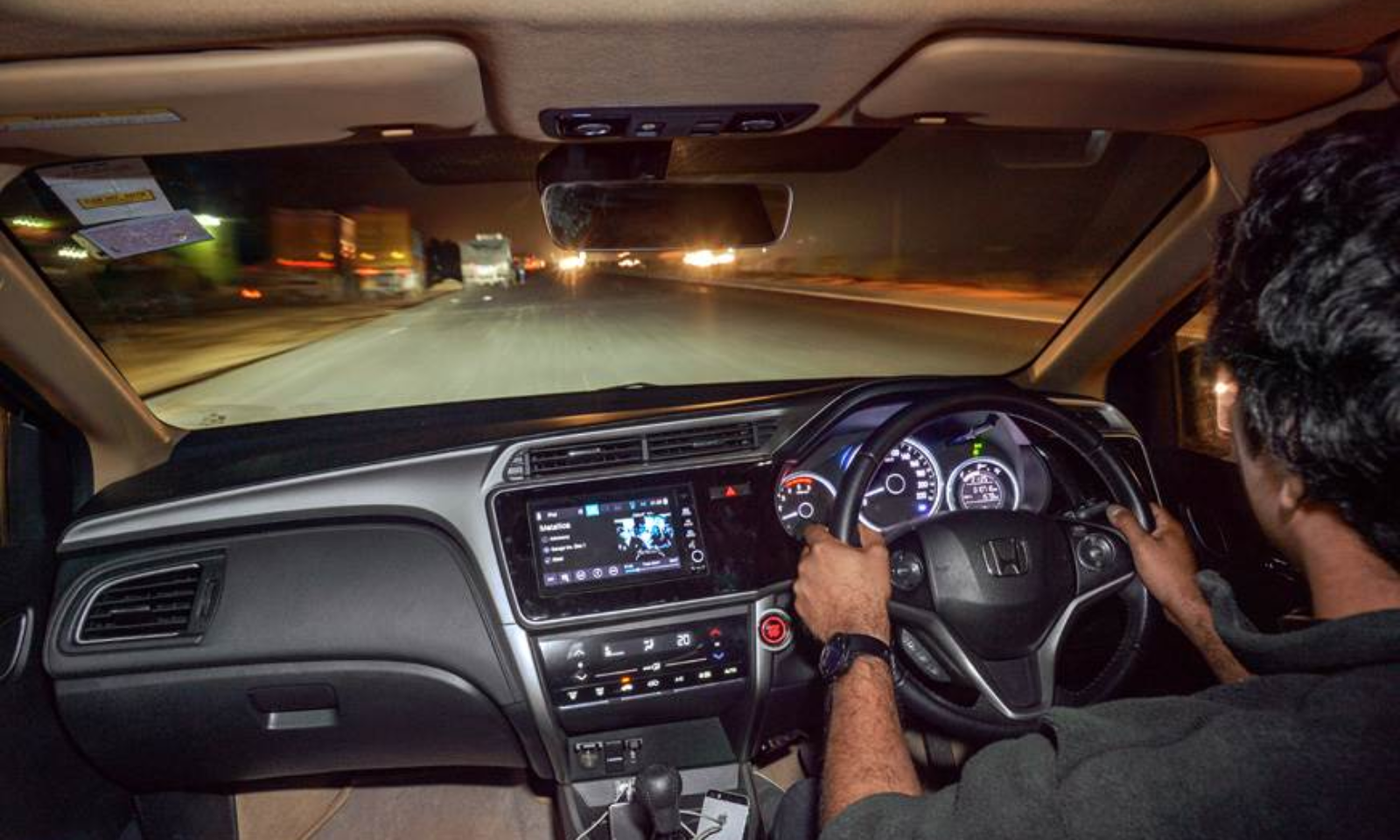
The court’s reasoning rested on scientific understanding of COVID-19 transmission. Even when a person drives alone in their car, they potentially release respiratory droplets that can remain viable on surfaces for hours. When another person subsequently enters that vehicle, whether a family member, a valet, or a mechanic, they could be exposed to these droplets. Additionally, the court considered scenarios where a driver might stop at various locations throughout the city, interact with others at traffic signals, or have brief encounters that could facilitate transmission. From this perspective, a vehicle moving through public spaces, even if momentarily occupied by a single person, functions as a potential vector for disease transmission.
The judgment emphasized that the definition of “public place” must be elastic enough to address the realities of pandemic management. A rigid, formalistic interpretation that would exempt private vehicles from mask mandates simply because they are privately owned would create significant gaps in public health protection. The court noted that determining what constitutes a public place in the pandemic context requires examining the manner in which the coronavirus spreads and the immediate risk of exposure to other persons under varying circumstances.
This ruling reflects a broader principle in Indian jurisprudence: that statutory interpretation must be guided by the purpose and object of the legislation. When the paramount concern is protecting public health during a global pandemic, courts will interpret provisions expansively to ensure that regulatory measures can be effectively implemented. The Delhi High Court’s decision thus represents not merely a technical legal determination, but a value judgment about prioritizing collective health security during extraordinary circumstances.
The Supreme Court Ruling Under the NDPS Act
In stark contrast to the Delhi High Court’s expansive interpretation, the Supreme Court of India took a restrictive view when examining whether a private vehicle constitutes a public place under the Narcotic Drugs and Psychotropic Substances Act, 1985. The case of Boota Singh v. State of Haryana [1] presented the court with a critical question about procedural safeguards in drug-related arrests and searches. The outcome would determine whether the accused received a fair trial or faced conviction based on procedurally flawed evidence collection.
The NDPS Act contains two crucial provisions governing searches and seizures: Section 42 and Section 43. Section 42 deals with the power of entry, search, seizure, and arrest without warrant or authorization in buildings, conveyances, or enclosed places. This section imposes strict procedural requirements designed to protect individual liberty. An officer must have reason to believe, based on personal knowledge or information given by a person and taken down in writing, that contraband is concealed in a specific location. The officer must conduct searches between sunrise and sunset unless exceptional circumstances exist, and must send a copy of the information to their immediate superior within seventy-two hours.
Section 43, conversely, pertains to the power of seizure and arrest in public places. This provision grants officers authority to seize narcotic drugs, psychotropic substances, or controlled substances in any public place or in transit, and to detain and search any person whom they have reason to believe has committed an offense under the Act. Crucially, Section 43 does not impose the same stringent procedural requirements as Section 42. The Explanation to Section 43 defines “public place” to include “any public conveyance, hotel, shop, or other place intended for use by, or accessible to, the public.”
In Boota Singh, the recovery was made from accused persons who were in a jeep parked at a public road. The prosecution argued that since the vehicle was at a public place, Section 43 applied, obviating the need to comply with Section 42’s procedural safeguards. The High Court accepted this argument and convicted the accused. However, the Supreme Court took a different view, focusing on the specific language used in the Explanation to Section 43.
The Supreme Court, in a bench comprising Justices U.U. Lalit and K.M. Joseph, carefully analyzed the Explanation’s text. The Explanation specifically mentions “public conveyance” as an example of a public place, but makes no reference to private vehicles. The court observed that when the legislature deliberately uses specific terminology, courts must respect that choice and not read additional meanings into the statute. The evidence clearly showed that the vehicle in question was not a public conveyance but belonged to one of the accused. The registration certificate confirmed it was not a public transport vehicle.
The Supreme Court held that the legislature’s decision to specify “public conveyance” while remaining silent on private vehicles was deliberate and meaningful. Had the legislature intended to include private vehicles within the definition of public place under Section 43, it would have either used broader language or specifically included private vehicles in the Explanation. The court concluded that a private vehicle does not come within the expression “public place” as explained in Section 43 of the NDPS Act.
This interpretation had significant consequences for the case. Since the vehicle was not a public place under Section 43, the officers were required to follow the procedural safeguards mandated by Section 42. The failure to comply with these procedures meant the search and seizure were illegal, rendering the evidence inadmissible. The Supreme Court accordingly acquitted the accused, emphasizing that procedural protections exist to prevent arbitrary state action and must be strictly observed in criminal cases involving serious penalties.
The Boota Singh judgment illustrates a fundamental principle of criminal law: when liberty is at stake, courts construe statutory provisions strictly and insist on compliance with procedural safeguards. The NDPS Act provides for severe punishments, including lengthy imprisonment. In such circumstances, the Supreme Court refused to adopt an expansive interpretation that would dilute the protections Parliament specifically built into the legislation.
Alcohol Consumption Under Excise Laws
The question of private vehicles as public places has also arisen in the context of alcohol prohibition and excise laws. The Supreme Court addressed this issue in Satvinder Singh Saluja v. State of Bihar [2], a case arising from Bihar’s comprehensive alcohol prohibition regime. The petitioners were charge-sheeted under Section 53(a) of the Bihar Excise (Amendment) Act, 2016, after being found consuming alcohol inside a private vehicle. They challenged the charges, arguing that a private car cannot be considered a public place.
The Bihar Excise (Amendment) Act, 2016, defines “public place” in Section 2(17A) as “any place to which the public have access, whether as a matter of right or not and includes all places visited by the general public and also includes any open space.” This definition is notably broader than the Explanation to Section 43 of the NDPS Act. Similarly, Section 2(53) of the Bihar Prohibition and Excise Act, 2016, defines “public place” to mean “all places visited by general public and includes any open space, club, hotel and any place, whether private or public, means of transport whether private or public.”
The Supreme Court, in a judgment authored by Justice Arun Mishra, focused on the key word in the definition: “access.” The court examined what it means for the public to have access to a place. Relying on Black’s Law Dictionary, the court noted that access means “a right, opportunity, or ability to enter, approach, pass to and from, or communicate with.” The court reasoned that when a private vehicle travels on a public road, the public does have access to it, not necessarily as a matter of right, but certainly in terms of opportunity and ability to approach.
The court elaborated on this interpretation with practical examples. A private vehicle on a public road may stop at traffic signals where others can approach it. The driver may interact with traffic police, toll booth operators, fuel station attendants, or passersby. The vehicle may need repairs, requiring a mechanic’s access. Family members, friends, or colleagues may enter the vehicle at various points. In all these scenarios, the public has access to the private vehicle, bringing it within the statutory definition of public place.
Moreover, the Supreme Court observed that the Bihar legislature’s decision to specifically include “means of transport whether private or public” in the definition of public place under the Bihar Prohibition and Excise Act, 2016, reflected a clear legislative intent to cover private vehicles. Even the Bihar Excise (Amendment) Act, 2016, which omitted the phrase “public conveyance” that appeared in earlier versions of the law, indicated that the legislature intended to eliminate any distinction between public and private conveyances for the purpose of alcohol prohibition.
The court also considered the broader policy objectives of Bihar’s prohibition laws. The state had adopted comprehensive prohibition as a matter of public policy, aimed at eliminating alcohol consumption to address social problems associated with drinking. Allowing individuals to consume alcohol in private vehicles with impunity would create a significant loophole in the prohibition regime, undermining its effectiveness. The court held that such an interpretation would frustrate the legislative purpose and could not be accepted.
The Satvinder Singh Saluja judgment demonstrates how statutory definitions and legislative policy inform judicial interpretation. When a statute explicitly defines a term broadly, and when that broad definition serves clear policy objectives, courts will interpret the provision accordingly. The Supreme Court distinguished this case from the NDPS Act scenario, noting that different statutes use different language and serve different purposes, justifying different interpretations of the same phrase.
Kerala High Court on Alcohol Consumption
The Kerala High Court has similarly held that drinking inside a private car at a public place constitutes an offense under the Kerala Abkari Act. In Rajendran Pillai v. State of Kerala [3], the court examined the 2010 amendment to the Act, which expanded the definition of public place for the purpose of Section 15C. Section 15C prohibits drinking in public places, and the amendment specifically brought private vehicles parked in any public place within the definition.
The Kerala legislature’s approach differed slightly from Bihar’s in that it explicitly addressed the ambiguity through statutory amendment. The 2010 amendment left no doubt about legislative intent: private vehicles in public places would be treated as public places themselves for the purpose of enforcing the prohibition on public drinking. The Kerala High Court upheld this interpretation, holding that the amendment was a valid exercise of legislative power and served the legitimate state interest in regulating alcohol consumption in public spaces.
The Kerala case illustrates another dimension of this legal landscape: the role of statutory amendments in clarifying ambiguous provisions. When judicial interpretation leaves room for doubt, or when enforcement agencies face practical difficulties, legislatures can step in to clarify their intent through amendments. The Kerala legislature’s decision to explicitly include private vehicles demonstrates the kind of precision that can resolve legal uncertainty and provide clear guidance to both citizens and law enforcement.
Underlying Principles of Statutory Interpretation
The divergent outcomes in these cases reflect fundamental principles of statutory interpretation that guide Indian courts. First among these is the principle of purposive interpretation. Courts examine not just the literal words of a statute but the purpose it seeks to achieve and the mischief it aims to remedy. When a statute has clear public welfare objectives, courts interpret its provisions to effectuate those objectives rather than adopting narrow readings that would frustrate legislative intent.
Second, context matters profoundly in legal interpretation. The same phrase can have different meanings in different statutory contexts. A “public place” under pandemic regulations serves different purposes than a “public place” under drug control laws. The former emphasizes disease prevention and public health protection, while the latter balances law enforcement needs against individual liberty protections. Courts recognize these contextual differences and tailor their interpretations accordingly.
Third, the principle of strict construction applies in criminal matters. When interpreting penal provisions, especially those authorizing searches, seizures, and arrests, courts lean toward protecting individual liberty. Procedural safeguards exist for good reason, and courts insist on their observance. The NDPS Act’s distinction between Section 42 and Section 43 reflects Parliament’s judgment about when stricter procedures are necessary. Courts respect that judgment by refusing to blur the distinction through expansive interpretation.
Fourth, expressio unius est exclusio alterius—the expression of one thing is the exclusion of another—plays a role in statutory interpretation. When a statute specifically mentions certain categories while remaining silent on others, courts infer that the omission was deliberate. The NDPS Act’s reference to “public conveyance” without mentioning private vehicles suggested to the Supreme Court that private vehicles were intentionally excluded from Section 43’s scope.
Fifth, legislative history and statutory definitions guide interpretation. When a legislature defines a term explicitly, courts give effect to that definition. The Bihar and Kerala excise laws’ broad definitions of “public place” directly influenced the Supreme Court and Kerala High Court’s interpretations. Conversely, the NDPS Act’s narrower Explanation to Section 43 led to a more restrictive reading.
Procedural Safeguards and Individual Rights
The Boota Singh case highlights the critical importance of procedural safeguards in protecting individual rights. Section 42 of the NDPS Act requires that information leading to a search be reduced to writing and forwarded to a superior officer within seventy-two hours. These requirements are not mere formalities but substantive protections against arbitrary state action. They ensure accountability, create a documentary record, and provide a check on potential abuse of power.
The NDPS Act authorizes severe punishments, with some offenses carrying life imprisonment or even the death penalty. Given these harsh consequences, strict adherence to procedural requirements is essential. The Supreme Court has repeatedly held that in cases involving personal liberty and serious criminal penalties, procedural irregularities cannot be overlooked or condoned. The Boota Singh judgment reinforces this principle, making clear that the distinction between Section 42 and Section 43 is not academic but carries real consequences for the validity of searches and seizures.
This emphasis on procedure serves multiple purposes. It protects innocent persons from false implication, deters police from conducting searches based on mere suspicion or personal animus, creates evidence that can be examined in court, and maintains public confidence in the criminal justice system. When procedural requirements are diluted or ignored, all these objectives are compromised. The Supreme Court’s strict interpretation of Section 43, refusing to expand it to cover private vehicles, reflects these concerns and priorities.
Public Health Considerations
The Delhi High Court’s mask mandate ruling, by contrast, prioritizes collective health security over individual convenience. The COVID-19 pandemic presented challenges that few legal systems were designed to address. The highly contagious nature of the virus, its potentially severe health consequences, and the absence of effective treatments in the early pandemic period required extraordinary measures. Mask mandates, while imposing minor inconvenience on individuals, provided significant protection against viral transmission.
The court’s interpretation of “public place” in this context reflects the principle that individual rights are not absolute but must be balanced against competing public interests. During a public health emergency, the state’s power to regulate individual behavior expands correspondingly. Courts have long recognized that protection of public health is a valid exercise of the state’s police power, justifying reasonable restrictions on individual liberty.
The scientific understanding of COVID-19 transmission supported the court’s interpretation. Studies demonstrated that the virus could remain viable on surfaces for hours or even days. Respiratory droplets expelled by an infected person could contaminate a vehicle’s interior, potentially infecting subsequent occupants. The court took judicial notice of these scientific facts and incorporated them into its legal analysis, demonstrating how contemporary knowledge informs statutory interpretation.
Critics might argue that the Delhi High Court’s ruling infringes on personal autonomy, requiring individuals to wear masks even in the privacy of their own vehicles. However, the court’s response would be that a vehicle traveling through public spaces, stopping at various locations, and potentially carrying different occupants over time, does not offer the same privacy as one’s home. The vehicle’s mobility and the driver’s inevitable interactions with the outside world distinguish it from truly private spaces.
Alcohol Prohibition and State Policy
The alcohol prohibition cases from Bihar and Kerala reflect state-level policy choices about regulating alcohol consumption. Both states have determined, through their legislative processes, that alcohol consumption causes social harms justifying comprehensive prohibition or regulation. These policy choices, while debatable, fall within states’ constitutional authority to regulate alcohol under Entry 8 of List II (State List) in the Seventh Schedule of the Constitution.
When courts interpret excise laws, they recognize the legitimate state interest in regulating alcohol and the legislature’s prerogative to define the scope of prohibition. The broad definitions of “public place” in Bihar and Kerala’s excise laws reflect legislative judgments that alcohol consumption in vehicles, even private ones, falls within the regulatory sphere. Courts defer to these judgments unless they violate constitutional provisions or exceed legislative competence.
The practical enforcement considerations also support broad interpretation of “public place” in alcohol cases. If private vehicles were excluded from prohibition, enforcement would become nearly impossible. Individuals could simply consume alcohol in their cars with impunity, undermining the entire prohibition regime. The Supreme Court and Kerala High Court recognized these practical realities and interpreted the statutes to make enforcement feasible while serving the legislative purpose.
Balancing Individual Liberty and Collective Interests
The cases discussed in this article illustrate the ongoing tension in law between individual liberty and collective interests. Democratic societies value individual freedom highly, protecting personal autonomy against unnecessary state interference. Yet societies also recognize that individuals live in communities and that certain individual actions can harm others or undermine important collective goals.
The legal system resolves these tensions through carefully calibrated rules that seek to protect individual liberty while enabling legitimate regulation. The NDPS Act’s procedural safeguards exemplify this balance: the state can search and seize contraband, but only following procedures that protect against arbitrary action. Similarly, excise laws can regulate alcohol consumption in spaces where such consumption affects others, while respecting privacy in truly private spaces.
Courts play a crucial mediating role in maintaining this balance. When interpreting statutes, judges must consider both individual rights and collective needs, ensuring that neither is unnecessarily sacrificed. The contextual approach to defining “public place” reflects this mediating function: the term’s meaning shifts depending on which values are at stake in a particular statutory context.
Conclusion
The question of whether a private vehicle constitutes a public place reveals the law’s contextual nature and interpretive flexibility. The Supreme Court’s ruling under the NDPS Act, the Delhi High Court’s COVID-19 decision, and the alcohol prohibition cases from the Supreme Court and Kerala High Court reach different conclusions because they address different statutory frameworks serving different purposes.
Under the NDPS Act, a private vehicle is not a public place because the statute’s text specifies “public conveyance” without mentioning private vehicles, and because criminal law principles favor strict construction of provisions affecting liberty and procedural rights. For COVID-19 regulations, a private vehicle traveling through public spaces can be considered a public place because pandemic control requires understanding how disease spreads and preventing transmission across all potential vectors. Under Bihar and Kerala’s excise laws, private vehicles in public places are treated as public places because the statutes explicitly define the term broadly and because state policy choices about alcohol regulation deserve deference.
These divergent interpretations are not contradictory but complementary, each serving the purposes of the particular legal regime within which it operates. They demonstrate that law is not a mechanical exercise of applying fixed rules but a dynamic process of interpretation that considers text, context, purpose, and consequences. Understanding this contextual approach is essential for lawyers, law enforcement officials, policymakers, and citizens navigating the legal landscape.
The underlying message is that legal definitions must be sufficiently flexible to serve different regulatory purposes while maintaining sufficient clarity to provide guidance and protect rights. Courts achieve this balance through careful analysis of statutory language, legislative purpose, constitutional principles, and practical consequences. The private vehicle cases exemplify this judicial craft at work, showing how seemingly simple questions can require sophisticated legal analysis that considers multiple dimensions of law, policy, and social values.
References
[1] Boota Singh v. State of Haryana, Criminal Appeal No. 670 of 2011, Supreme Court of India.
[2] Satvinder Singh Saluja v. State of Bihar, Criminal Appeal No. 1126 of 2019, Supreme Court of India.
[4] Saurabh Sharma v. Sub Divisional Magistrate (East), W.P.(C) 3541/2021, Delhi High Court.
[5] Narcotic Drugs and Psychotropic Substances Act, 1985. Available at: https://www.indiacode.nic.in/handle/123456789/1944
[6] Bihar Excise (Amendment) Act, 2016. Available at: https://state.bihar.gov.in/excise/
[7] Kerala Abkari Act, 1077. Available at: https://www.livelaw.in
[8] Constitution of India, Seventh Schedule.
[9] Black’s Law Dictionary, 11th Edition, West Publishing Company.
Authorized by Rutvik Desai